

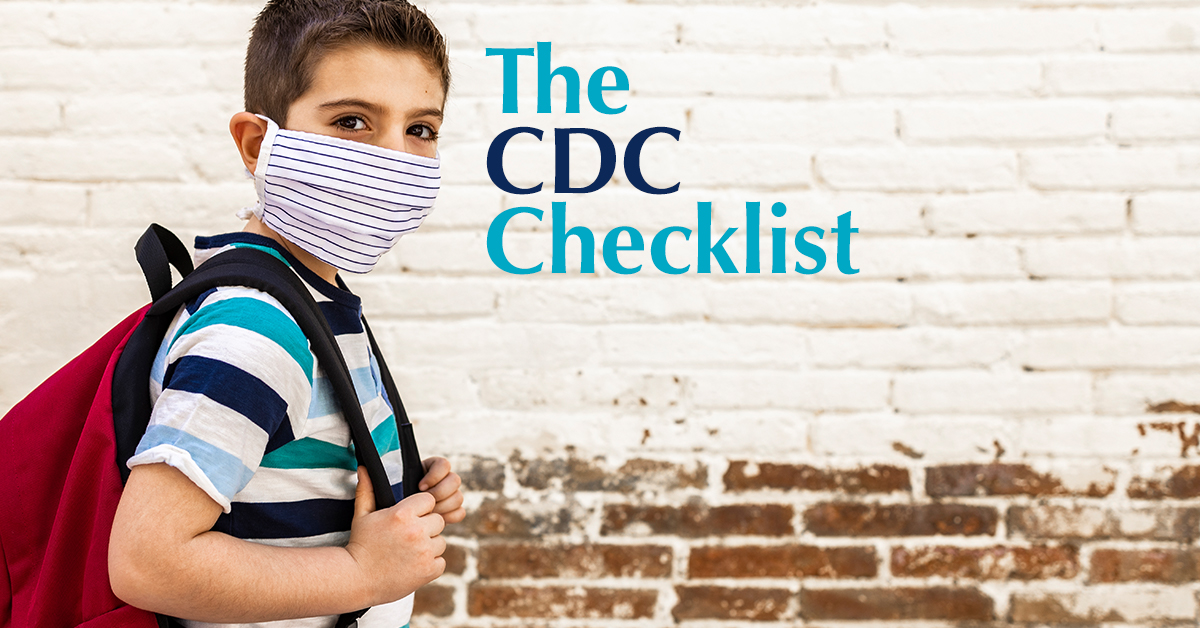
When children walk into their classrooms this fall, many things will look different. Since familiarity helps children feel secure, the changes necessary to safeguard everyone from COVID-19 may upset or confuse your child, at least at first. To help parents prepare children for new school procedures, the national Centers for Disease Control (CDC), offers some ideas:
Talk with your child:
Describe how the school will look different (e.g., desks far apart from each other, teachers maintaining physical distance, the possibility of staying in the classroom for lunch).
Ask about how the school is going and about interactions with classmates and teachers. Find out how your child is feeling and communicate that what they may be feeling is normal.
Watch for behavior changes:
- Excessive crying or irritation, excessive worry or sadness, unhealthy eating or sleeping habits, difficulty concentrating, all may be signs of your child struggling with stress and anxiety.
Stay informed:
- Try to attend school activities and meetings. Schools may offer more of these virtually. As a parent, staying informed and connected may reduce your feelings of anxiety and provide a way for you to express any concerns you may have about your child’s school.
Ask your school:
- About any plans to reduce potential stigma related to having or being suspected of having COVID-19.
- If there are any systems in place to identify and provide mental health services to students in need of support. If so, identify a point of contact for these services at your school.
- Do they have a plan to help students adjust to being back in school? Support may include school counseling and psychological services (including grief counseling), social-emotional learning (SEL)- focused programs and curricula, and peer/social support groups.
- Will they provide training for students in mindfulness, incorporating SEL into classroom curriculum (either virtually or in-person), or support a child’s ability to cope with stress and anxiety? If not, consider asking about ways to add this to your child’s at-home learning.
And don’t forget to care for the caregiver. You can be a role model for your child by practicing self-care:
- Take breaks
- Get plenty of sleep
- Exercise
- Eat well
- Stay socially connected